

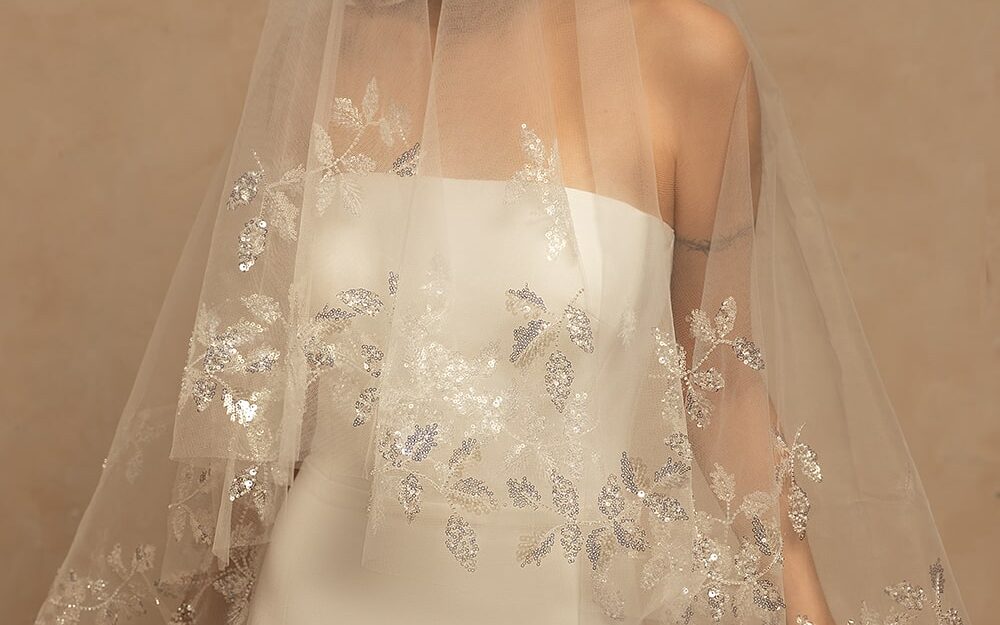
Wedding Veils
The wedding veil is a significant and multifaceted tradition with a rich history and various interpretations across different cultures and time periods. At Love Bridal we have a variety of lovely veils by various brands and designers such as Joyce Jackson, Wona Concept and Eva Lendel. Once your dream dress is chosen you will have the opportunity to select a veil to compliment your dress. Customization in design and colour is often possible!
Historical Origins
- Ancient Rome
- The wedding veil is thought to date back to ancient Rome, where brides wore a veil called a “flammeum” which was red or yellow and covered the bride from head to toe. This was believed to protect her from evil spirits.
- Medieval Europe
- During the medieval period, veils symbolized the bride’s purity, modesty, and obedience. It was also believed to protect her from malevolent forces.
- Victorian Era
- Queen Victoria popularized the white wedding dress and veil when she married Prince Albert in 1840. This era emphasized the veil as a symbol of modesty and purity.
Fashion Statement
Today, veils come in various lengths, styles, and designs, often chosen for their aesthetic appeal rather than traditional symbolism.
Personal Meaning
Many modern brides choose veils that reflect their personal beliefs, values, or family traditions, sometimes opting to forgo the veil altogether.
Symbol of Transition
For some, the act of lifting the veil represents the transition from single life to married life, a ceremonial moment during the wedding.
Types of Veils
- Blusher
- Sometimes called a 2 tier veil. The top, shorter layer of the veil that covers the face is typically lifted during the ceremony.
- Flyaway
- A multi-layered, short veil that just brushes the shoulders.
- Fingertip
- Extends to the bride’s fingertips when her arms are resting.
- Chapel
- A long veil that reaches the floor and often extends just beyond the train of the wedding dress.
- Cathedral
- The longest veil, extending well beyond the train of the wedding dress, making a dramatic statement.