

Wedding Dress Alteration Costs
Wedding dresses are complex garments. The seamstress is taking responsibility for a once-in-a-lifetime dress. Wedding dress alterations are expensive because they’re closer to custom dressmaking and couture sewing than ordinary clothing repairs.
A typical wedding gown can have multiple layers in the skirt along with horsehair (faux) hems and crinolines. The bodice may have boning and corsetry with built-in cups. Both skirt and bodice may have detailed beading, sequins, or embroidery.
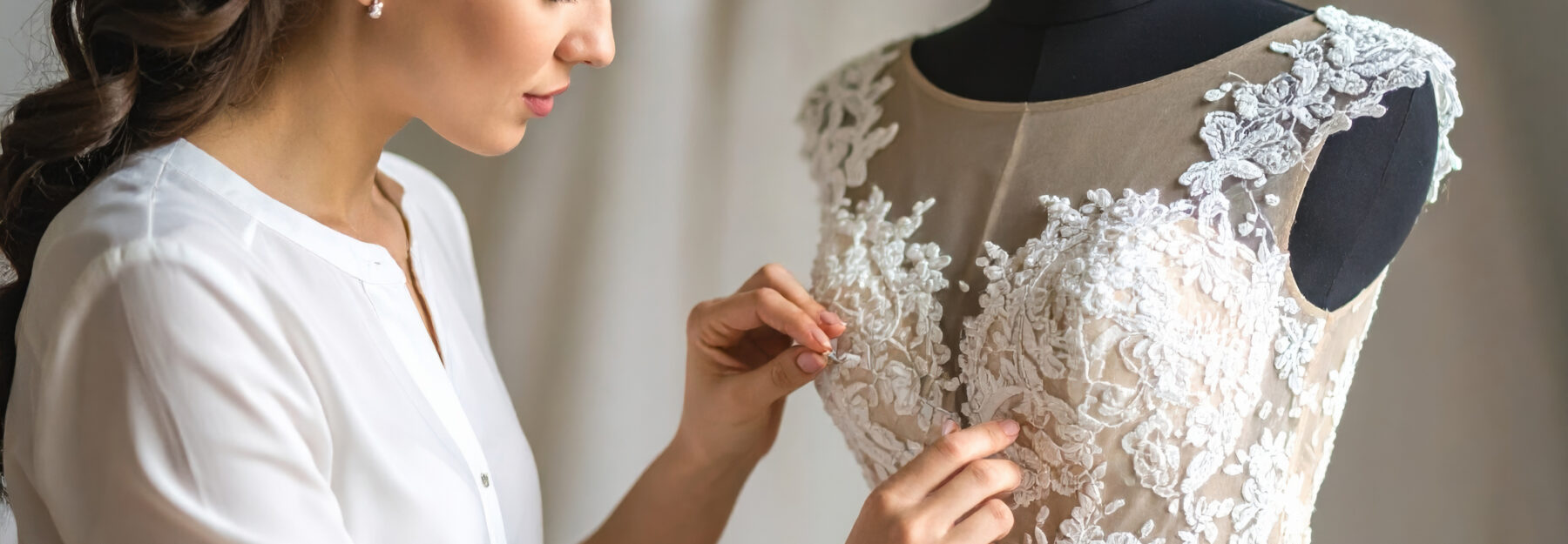
Shortening a hem might mean adjusting 5–10 layers separately rather than making one cut. Some hems such as lace edged one may need adjusting by hand sewing where others that are more simple may be done on a sewing machine. When it comes to the bodice, beadwork or lace details may have to be removed to adjust sizing and then carefully sewn back on by hand. This can take several hours of labour. When replacing a zipper it will be sewn in by machine but the lining against the zipper is also sewn by hand.
Bridal alterations are highly skilled work. It takes years to master the sewing methods to alter a wedding dress. This is the same for men’s tailoring. The processes are unique to each garment and the fabrics involved. These jobs require understanding garment construction, fit, balance, and how the dress moves when worn.
-
Simple hem: £100–£250
-
Bodice adjustments: £100–£300
-
Bustle: £50–£150
-
Multiple alterations: £300–£800+
-
Complex designer gowns with lace/beading: £500–£1,000
From a Fashion Industry Perspective many brides are surprised because alterations can be 20–50% of the dress price, but when you break down the hours involved, the hourly rate is often similar to that of other skilled trades. A gown that needs a hem, bodice adjustment, bustle, and lace repositioning can easily require 10–20+ hours of expert labour.